The New Extinction

As I was reading, I thought it was quite timely that news about the “re-emergence” of an extinct species was announced: the dire wolf. I will go a bit into that later; however, I want to discuss The Sixth Extinction: An Unnatural History by Elizabeth Kolbert first. One of the draws that led me to this book was our current understanding of extinction. It was just amazing that there was a universal belief that no species ever died out, up until the 1700s, when people would find fossils and bones that did not match any species that were alive at the time. We also didn’t have the meteoroid hypothesis about what killed off the dinosaurs until the 80s. It just blew my mind how recent it was. Next, the author covered the more modern extinctions and how the migration of Homo sapiens aligns with the extinction of several species, and how to current activities may lead to the next mass extinction without a random catastrophe.

Now, onto the subject of making a species come back from extinction. As it may not be such a surprise with the dire wolves, we have not brought a species from extinction. As far as I know, science has not gone that far yet. The dire wolves are just grey wolves with some genes edited, but they are very cute, nonetheless. Even if they did come back from extinction, the species would still be considered functionally extinct, since the scientists are not trying to breed the wolves together. Also, as was brought up with Jurassic Park, I’m not sure that we should consider bringing species back, as cool as it would be. Evolution has continued without the existence of these species, so there would be no natural protections, unless you consider humans poaching them, which, I believe, would inevitably happen. Any de-extinct species would, in my opinion, be a glorified invasive species. In this example, wolves are considered top predators in their environment and would probably have no natural failsafe to keep the ecosystems aligned. I personally believe that we should focus on keeping the species that are still alive alive, rather than trying to create new species for us to protect or protect against. (But that might be none of my business.)

Math IRL

Alright, guys… I’m an absolute nerd. You know this; I know this. I found a book about math in the real world and how we may or may not use it correctly, and I had to read it. I couldn’t help myself. It also had no reason being as interesting as it was. The book was The Drunkard’s Walk: How Randomness Rules Our Lives by Leonard Mlodinow.

The title refers to the mathematical principle of calculating the random path a drunk person would walk. (I told you this was going to be really nerdy from the start.) Part of my studies included learning some statistics, but even then, hearing some of the concepts in an everyday context had me answering questions incorrectly. The wording of math problems will always be confusing. Another interesting aspect was learning when many of the principles we take for granted came to be. Hilariously, it was from people trying to constantly win at gambling. It made statistics interesting, although I might be a bit biased because I watched shows about math and had the time of my life.

The Mysterious Process

There is apparently a very secret world that I knew little about even though I am part of the community. What community am I talking about? The uterus-having community. I read Period: The Real Story of Menstruation by Kate Clancy to see if there were any secrets that I could uncover. Although, in all seriousness, I did learn a lot about a process that happens to me. I did grow up in an “I don’t want to hear about it” household. Now that I’m older, I’ve taken the position of “it’s something that happens to about 50% of the population, so get over yourself.” Even with that perspective, I never took the time to learn about it until now.

This book takes the story of menstruation from a cultural perspective. It was interesting to hear about cultures where periods are something to revere rather than a shameful action and how that view has shaped gynecology. Next, the book covers the biology of why. Humans are one of the very few species that menstruate, so it’s interesting to listen to the theories of how humans have evolved. Another interesting thing I learned was that the “normal period” isn’t quite normal. People are placed into boxes that never made sense to begin with and can move in and out of said boxes. For anyone interested in the topic, I highly recommend this book.

Also, because I am an equal-opportunity reader, I would also love to read a book on male reproduction. I spent my doctorate studying parts of it, but I genuinely believe I could always learn more. Period was suggested to me as a good read, so it went on my list.

Let Me Teach You How to Lie

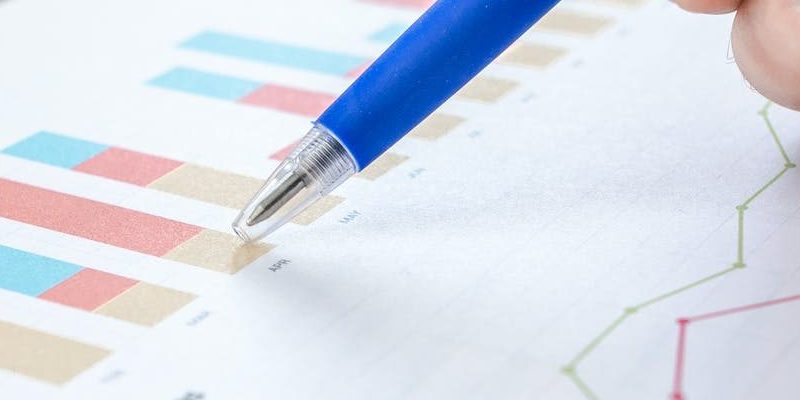
Well, lie is a really strong word for what I’m going to discuss. A better word would be to deceive with facts and logic. I recently read How to Lie with Statistics by Darrell Huff. This book goes into all of the ways in which a glorified “statistic” can be used to sway and mislead the people who see it. With fun illustrations, we are taught how exactly looking at different axes and altering study design, you can get some really interesting conclusions, whether justly or not. At the end, we are at least taught who to dig deeper into what we are seeing to draw our own conclusions that may be different from the conclusions we are being led to.

One of the funny things about this book is how money works. Being that this book was written in 1954 and read by me in 2025, let’s just say that inflation has not hit these numbers. Having super “wealthy” Yale graduates making an annual salary of $25,000 or the outrage of the price of bread doubling to a single dollar was hilarious. If only the author knew and could update these numbers for the modern day. Hilarity aside, this book is a great way to learn how people may inadvertently lie to you, because they are 95 percent of the time*.

* Source: Because I said so…

Dismantling the Everything

My original thought was to title this post “Dismantling the Patriarchy,” but let’s all be honest: we need to dismantle everything and just start over. Yes, I’m being hyperbolic and extreme, but I’m sometime just tired. I recently read the heavy anthology Everyday Sexism by Laura Bates, after her online project by the same name.

While the book was originally published in 2014, there were times reading this book where I could swear that the stories from the many others on the pages where from a month ago, if not for the fact that the sacred bird Twitter logo was on the pages. Also, in 2014, I was still in high school, if anyone was here back in those days, so I wasn’t very in the know of many of the journal articles discussed. I was too busy watching magical girl anime and procedural cop dramas and trying to survive high school. Super busy, as you can see. Even though at this point the stories are over a decade old, it was still as horrifying as if I would have opening the newspaper that morning.

Through the headache and tears, it should be a reminder of everything we have to do. No matter what you identify as, this book throws in your face things that even I try to ignore just to get through life, but it should be recognized. If you are able, and have the mental capacity to go through this heartache, I would. Figure out a way that you can make the world a little bit brighter for everyone today.

I Will Teach…

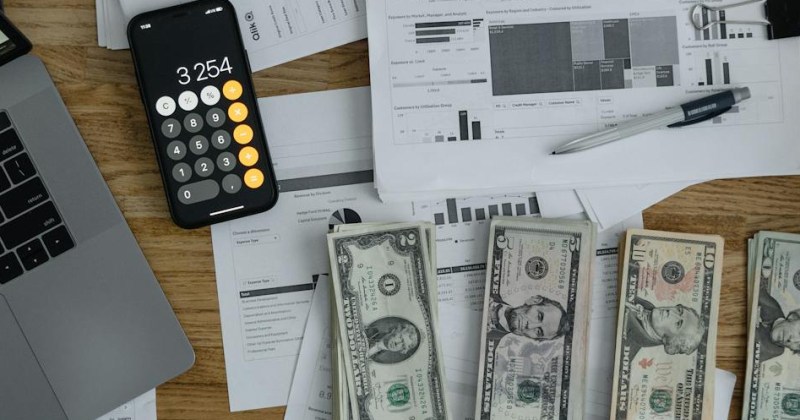
Well, it this post, I will not be teaching you anything in this post. Look out for another post of which I may teach you something. In this post however, I will be telling you to get your finances in order. I am in my last year of graduate school, so I need to make sure I’m ready to really start adulting. I’m mean guys, I’m been on the job search grind and trying to teach myself new skills to make myself look more useful. It’s been stressful. However, since I’m getting ready to get a pay raise off of a student break, I figured it’s really time to learn to handle my money by reading I will Teach You To Be Rich by Ramit Sethi

First, a couple of disclaimers. I have previously listened to his podcasts while being on of those people who never read his books, after watching the Netflix docuseries about how other people spend their money. What can I say other than I’m sure nosy. I have been learning a lot about personal finance in the last couple of years, so while there wasn’t much “new” information for me to learn, it was interesting to learn about some to the systems that others put in the place. It was also very comforting for someone to tell me that my system can be “good enough” as a recovering perfectionist. Yes, there is probably more that I could do, but do I have to? No.

I will also admit that I don’t get Ramit’s difference between a budget and a conscious spending plan. I’ve heard him describe it a couple of times, and I just don’t get it. I’ll continue to not get it as something that works for some people since “budget” is often seen as an ugly word. Either way you look at it, you should also get your finances it order, and remember that just because the holiday season is upon us, doesn’t mean its the perfect time to get into debt.

The Grad School Decision

Every year, I get the opportunity to mentor undergraduate students and lead them through a summer research project to introduce what grad school could be like. I find this rewarding and an informative decision, given that I would love to teach at a university and mentor students in the context of my own lab. During this program, I also give a presentation about my complicated route that led me to my current position as a graduate research assistant. During this talk, I usually give tips and a list of things to consider. Recently, a new book was released called _Is Grad School For Me?: Demystifying the Application Process for First-Gen BIPOC Students_ by Yvette C. and Miroslava Chávez-García. Of course, I am never one to either recommend or denounce a book without even trying to read it.

For full context, I have listened to Dra. Martínez-Vu’s podcast, “Grad School Femtoring,” and I was aware that she was in the process of writing a book based on the graduate school application process. I do enjoy her podcast content; however, I was worried that someone not from a scientific field may not understand that specific process of giving a scientific application. I’ve seen this sometimes where the disciplines just do not translate. I did not need to be worried, as I felt that this was a great book that gave enough specifics and generalized information to be useful. There were also example statements from different fields to give an idea of what different applicants said in terms of their different fields of study. Also, there was a lot of informational content that surrounded all of the material presented. I anecdotally noticed some of the aspects of being an underrepresented student, but I would always shake it off as it “just being me” or that “I’m reading too much into the situation.” It was very validating that it was not just me and that there is actual research into this field.

I think this is an amazing book whether you think that further going for higher education is for you or you are trying to help someone make that decision. I’m just upset that this book was not written soon as this would have been a relieving experience to read before making this step in my overall education journey.

I Hope You Get Better

As a scientist, I think that the more we try to understand the world, the better, no matter what other things someone may believe. I am also a strong believer in understanding history so that it hopefully doesn’t rhyme. Diseases are interesting to me, not just as someone who is currently studying cancer, but as someone who always seemed to get three colds a year. Taking my getting colds every year to the next level gives you plagues, which then of course led me to reading the book Get Well Soon: History’s Worst Plagues and the Heroes Who Fought Them by Jennifer Wright.

Prefacing this with being just four years after the initial shutdown after the COVID-19 outbreak in the United States, and as someone who did everything the CDC told me to do, it was such an interesting read. Over and over again, we saw people doing everything they could while others discounted those efforts, some for good and some for bad reasons. Post-COVID, I was just face-palming and trying to hide my face with my hands in second-hand embarrassment. I completely agree with the author and that there are key takeaways we should take from these ancient diseases in order to protect ourselves in the future. Even the little things we can do on a personal level can significantly affect our health. Because let’s face it, there is going to be another plague someday. I would hate for history to continue rhyming.

Wars on Nouns

If you are anything like me, as in born within five or so years of me, you probably do not remember a world where the United States is not at what with… something. For example, I have no memory of a pre-9/11 world. My parents did a decent job of not really shining a light on the subject. I just knew that airport security is very serious.

(Story time: On my most recent plane trip, one the the TSA agents yelled to the entire line, paraphrasing, “Guys, y’all know you can’t have water bottles and get through security. Don’t act like you don’t know. This has been a rule for like 13 years.” I almost died laughing in line. There is always that one person. Alright, story time over.)

Anyway, like lots of people nowadays, I do have an almost morbid curiosity for what you could call true crime content and wanting to understand the thinking behind people doing the things they do. Now, when I came across a book discussing the United States’ role in the Middle East for the last twenty years, I was very interested since there have been conflicting views on the topic since I remember. In this century’s version of the Pentagon Papers, we have The Afghanistan Papers by Craig Whitlock of The Washington Post.

If you are interested in political history but do not care for much discussion of military strategy, I think you will enjoy this book. Rather than discussing the nitty-gritty of planning operations, we are able to see the big picture overview of how the American government was selling the “war” to its citizens versus what was actually said behind the scenes. One of the most interesting things to me was how Whitlock discusses how he genuinely believes that we would not have been in the Middle East as long as we were, and maybe still are, if there wasn’t what seems to be the intentional disregard for the culture of the area. Given the evidence laid out, I have to agree. From my admittingly lack of information on some of these procedures, there seemed to be a better way.

If you are interested, like I was, to see what we have been doing for the last twenty years as a country, I believe that you will like this book. Even if you do not agree with the takeaways Whitlock makes, I still think it is important to see how the information the general public was told was very different from what was being said behind closed doors. If nothing else, you can see how these continuous wars on nouns, don’t work and leave society wanting.

The Invisible Cost

Book two of the nonfiction grind includes more information that I feel like I should innately know. This week, I will discussing Invisible Women: Data Bias in a World Designed for Men by Caroline Criado Pérez. This book discusses the many different ways in which women are not accounted for, whether it be everyday living, work, and gaming. There were many aspects of which I had never even thought. Ever thought thought about how you are always cold in the work place? Well, women’s metabolic rate may have something to do with that. Ever thought about motion sickness? Well, there many be differences there as well. Again, is just these things that you never thought about, as well as things that are common, such as the unpaid labor that is often put onto women. Yes, I did know that, but I did not realize some of the downstream effects having the burden of much of the unpaid labor has on women. It was a fascinating read, for those who are interested, but also brought up was in which I personally could close the gap, because these were also things I never thought about. It’s definitely something to think about.